
What Is Lent — And Why Do Christians Observe It?
- Nora Almazan
- Feb 18
- 3 min read
By: Nora Almazan
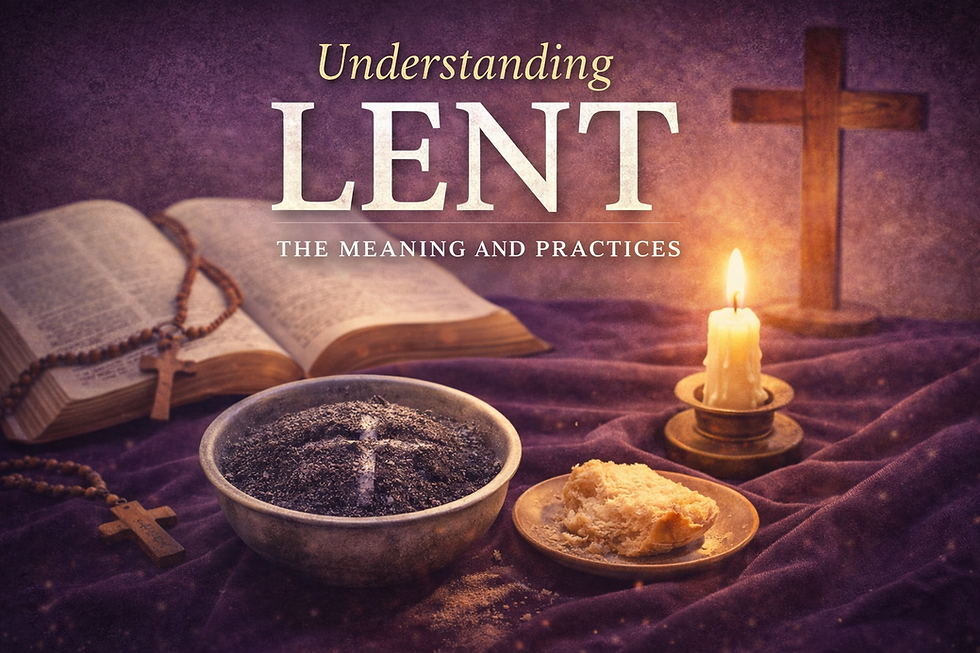
Every year, just after Valentine’s Day, something begins to happen across the Christian world.
Ashes appear on foreheads. People start giving up sweets, coffee, or social media. Church sanctuaries grow a little more reflective. The season is called Lent, and while many people recognize the word, fewer understand its purpose.
Lent is not really about giving up chocolate. It is about making room for God.
When Lent Happens
Lent begins on Ash Wednesday, which falls this year on Wednesday, February 18th (today). It lasts for 40 days, not counting Sundays, ending on Easter Sunday.
The 40-day length is intentional — it mirrors the 40 days Jesus spent fasting and praying in the wilderness before beginning His ministry.
So in a sense, Lent is a journey. Christians symbolically walk with Christ toward the cross and the resurrection.
The Meaning Behind the Ashes
On Ash Wednesday, many churches place ashes on a person’s forehead in the shape of a cross.
The scriptures remind us:
“Remember that you are dust, and to dust you shall return.”
That may sound somber, but it isn’t meant to be depressing. It is meant to be grounding. The ashes remind believers of two things: Human life is temporary• God’s grace is eternal.
Lent begins with humility — recognizing our need for forgiveness, mercy, and spiritual renewal.
Why People “Give Something Up”
The most widely recognized part of Lent is fasting or giving something up. But the purpose is often misunderstood.
It isn't about punishment. It is more about training.
Christians voluntarily remove a comfort so they will notice their dependence on God. Every time they crave the thing they gave up, they are encouraged to pray instead. The goal is to redirect attention from habit to faith.
Common Lenten sacrifices include:
sweets or desserts
coffee or soft drinks
social media
television
shopping or unnecessary spending
Some people add a discipline — daily Bible reading, prayer, journaling, or acts of kindness.
Are There Rules?
Different Christian traditions observe Lent differently.
Catholics traditionally follow the most structured practices:
Fasting on Ash Wednesday and Good Friday
No meat on Fridays during Lent
Confession and repentance
Acts of charity and service
Protestants
Many Protestant churches observe Lent more voluntarily. There are fewer formal requirements, but the emphasis is still on repentance, prayer, and spiritual growth.
Orthodox Christians
Orthodox Christians observe the strictest fast, often abstaining from meat, dairy, and sometimes oil for most of the season.
So yes — there are guidelines, but they are not meant as religious “tests.” They are spiritual tools.
The Three Pillars of Lent
Historically, Lent focuses on three practices:
Prayer – Deepening one’s relationship with God
Fasting – Letting go of distractions and comforts
Almsgiving – Helping others through charity and service
In other words, Lent turns a believer’s heart:
upward (toward God)
inward (toward personal reflection)
outward (toward others)
Why It Still Matters Today
In a fast, loud, constantly connected world, Lent may be more relevant than ever.
For 40 days, Christians intentionally slow down. They evaluate habits, attitudes, and priorities. It becomes a spiritual reset — a season to forgive, to reconcile, and to refocus.
Easter celebrates resurrection and hope. Lent prepares the heart to understand why that hope matters.
The message of Lent is simple:
Before there is joy, there is reflection. Before resurrection, there is surrender. And before Easter morning, there is the mighty work God does inside a person’s soul.


Comments