
Data Centers: What They Are, Why They Matter, and How They Shape Communities
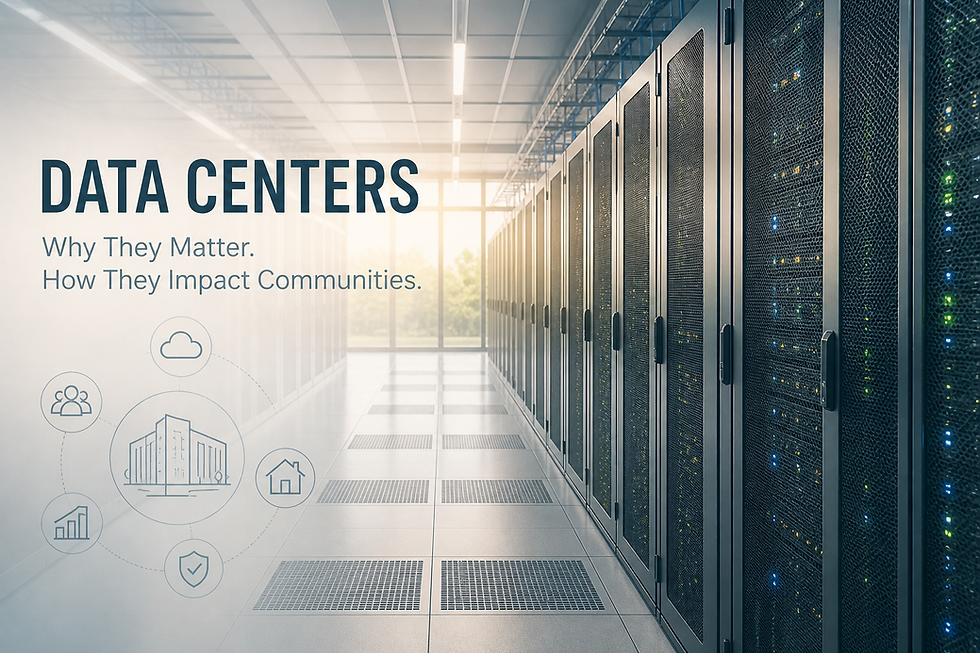
In today’s digital world, data centers are as essential as roads and power lines—yet most people never see them or think about them. Operating behind the scenes, these facilities power nearly every aspect of modern life, from banking and healthcare to entertainment and communication.
What Is a Data Center?
A data center is a secure facility that houses powerful computers—called servers—along with the equipment needed to store, process, and distribute data.
Every time someone sends an email, scrolls social media, streams a movie, or saves a document to the cloud, that activity is supported by a data center somewhere in the world.
Major technology companies like Google, Amazon, and Microsoft operate massive data centers, but smaller facilities also exist to support local businesses, hospitals, schools, and governments.
Why Data Centers Are Important
Data centers are the backbone of the digital economy. Without them, much of modern life would come to a standstill.
They support:
Communication: Email, messaging, video calls
Commerce: Online shopping, banking, payment systems
Healthcare: Patient records, telemedicine, research data
Education: Online learning platforms and digital resources
Public Safety: Emergency systems and government operations
In simple terms, data centers ensure that information is available instantly, securely, and reliably.
Positive Impacts on Communities
As demand for digital services grows, data centers are increasingly being built in communities across the United States, including regions in Georgia. Their presence can bring several benefits:
Job Creation
While not labor-intensive once operational, data centers do create:
Construction jobs during development
Skilled technical and maintenance positions
Indirect jobs through local vendors and services
Economic Investment
Data centers often represent hundreds of millions—or even billions—of dollars in investment, contributing to:
Local tax revenue
Infrastructure improvements
Increased economic activity
Infrastructure Upgrades
To support data centers, communities may see improvements in:
Power grids
Fiber-optic internet connectivity
Road access and utilities
These upgrades can benefit residents and local businesses alike.
Challenges and Concerns
Despite their advantages, data centers can also raise important questions for communities.
High Energy Use
Data centers consume significant amounts of electricity to power servers and cooling systems. This can:
Strain local power grids
Increase demand for energy production
Raise concerns about sustainability
Water Consumption
Some data centers use large volumes of water for cooling, which can be a concern in areas facing drought or limited water resources.
Land Use and Aesthetics
Large facilities can:
Change the character of rural or residential areas
Require significant land space
Lead to concerns about zoning and long-term development
Limited Long-Term Employment
Compared to manufacturing plants, data centers typically employ fewer people once construction is complete, leading some to question whether the long-term economic benefits match the scale of the investment.
Finding Balance
Communities across the country are working to balance the benefits and challenges of data center development. Many are asking:
How can growth be managed responsibly?
What safeguards should be in place for resources like water and power?
How can local residents benefit most from these projects?
As technology continues to evolve, these questions will only become more important.
The Bottom Line
Data centers may not be visible in everyday life, but their impact is undeniable. They power the systems people rely on daily while shaping the future of local economies and infrastructure.
As communities consider new developments, understanding both the opportunities and the challenges of data centers is key to making informed decisions that serve residents today—and in the years to come.


Comments